
Sources for Carlsbad Previous Residents
A backward address trail needs more than one kind of record. The County Assessor and Recorder can connect a parcel to ownership and recorded instruments. The Georgina Cole Library can connect a street to a listed household. Census pages, permits, maps, newspapers, probate, and obituaries fill different parts of the story. Each source has a start date, a keeper, and a limit, so choose the first stop by the era being tested rather than by the convenience of a web search.
| Source | Years It Covers | Where Held | What It Shows |
|---|---|---|---|
| Official Records index | 1970-present online | San Diego Recorder web index | Indexed parties, type, date, and document number; image by copy or kiosk |
| Recorder kiosk and deed books | Pre-1970 and current access | County offices and County Archives | Grantor-grantee entries and document images |
| Assessor current roll | Current; historical series by request | County Assessor and County Archives | Owner channel, values, parcel changes, and situs |
| Carlsbad permits | Coverage not officially stated | City Building service and CPRA request | Construction, owner or applicant, work, and dates |
| City and reverse directories | Exact years not published | Georgina Cole Library | Listed occupant, spouse, occupation, telephone, and address |
| Federal census | Through 1950 | Library databases and federal census holdings | Household members, relationships, and residence context |
| Sanborn maps | Collection and search dependent | Library databases and Library of Congress collection | Footprint, material, use, and address context |
| Newspapers and obituaries | Title-dependent | Library databases and microfilm | Moves, deaths, relatives, and property events |
| Superior Court probate | 1974+ index; pre-1974 excluded | San Diego Superior Court | Decedent, representative, heirs, and filings |
Start with the current parcel for a recent chain, with the library for an older listed occupant, and with census or newspaper indexes when the address predates modern street delivery. The table's “exact years not published” entries are deliberate. Confirm the local directory run and the permit coverage with the keeper before treating a gap as a missing person.
Carlsbad's Deed Chain Starts with APN
Begin with the physical location, called the situs address, in the County property-information service or a map. Capture the Assessor's APN exactly. The APN is the parcel number that crosswalks assessment maps, tax data, planning cases, and recorded documents even when street wording changes. The public property page supports searches by parcel number or address, not an owner-name search. Ownership information is available by telephone at 619-236-3771 or at a county office kiosk.
Keep the situs address separate from the tax mailing address. The situs is where the parcel lies. The mailing address is where notices go, and it may belong to a different city, a trust administrator, or another chosen destination. That mismatch can suggest an absentee owner or a changed mailing choice, but it does not prove who lives at the property. The San Diego County property-information page and the County ISRP parcel map are the two practical starting points.
Address to deed flow: normalized situs address to APN, APN to current owner channel, current owner to grantee deed, deed to grantor, grantor to earlier grantee, then legal description back through the chain.
Walk the Carlsbad Deed Chain Backward
The Recorder's Official Records Index shows indexed information from 1970 to the present. It does not place the full document image in the free web result. Use the current owner, transfer timing, legal description, and co-party names to find the right instrument, then view the image at a kiosk or order a copy. Ordinary copies cost $2 for the first page and $0.05 for each additional page, with $1 for certification per document. A credit or debit transaction adds $2.50.
- Pull the current owner channel, exact APN, situs, subdivision, and legal description from the Assessor or parcel map.
- Search the current owner as grantee in the Official Records Index around the transfer date.
- Record grantor, grantee, recording date, document number, document type, and legal description before ordering or viewing the image.
- Search the grantor as an earlier grantee, then use the APN, legal description, dates, and co-parties to separate the right parcel from a same-name match.
- Repeat until the online index ends, then move to a county kiosk, grantor-grantee book, microfilm, or County Archives reference path.
- Grantor and grantee
- The grantor transfers an interest; the grantee receives it. Their roles change from one deed to the next.
- Chain of title
- The linked sequence of recorded transfers that connects a present interest to earlier instruments.
- Legal description
- The formal lot, block, map, or metes-and-bounds wording that can identify land after a street name changes.
- APN
- The assessor parcel number used to crosswalk the parcel among maps, assessment records, and the kiosk search.
For a court file that becomes part of an estate trail, the California court-copy guidance explains the public request path.
The court-copy reference is a reminder to request a known case or document, not ask an office to build a list of people connected to an address.
Pre-1970 Carlsbad Records Need a Kiosk
Online convenience stops at a real boundary. The Recorder's web index covers 1970-present, and AB 1785 removed APN searching from the public web search effective December 9, 2024. APN searching remains available at five office kiosks. A researcher who starts with the address should therefore obtain the APN and current owner through the Assessor or GIS, search the owner as grantee online, and switch to a kiosk when the parcel itself is the key.
Earlier instruments require a different access chain: county office kiosks, grantor-grantee books, microfilm, or County Archives staff. Mail requests can go to San Diego Recorder/County Clerk, ATTN: Real Estate Records, P.O. Box 121750, San Diego, California 92112-1750; the recorder staff number is 619-238-8158. The Recorder's recording guidance states the index range, copy route, fee details, and APN change. Keep the image request narrow and identify the document number or date when possible.
Research hinge. A 1970-present online hit is an index clue. It is not the whole title file, and it does not remove the pre-1970 kiosk and archive fallback.
Reverse Directories Put Names at Addresses
Ownership and occupancy are different trails. A criss-cross directory can list a street, ascending house numbers, an occupant, a telephone, a business, or a vacant entry. That address-first view may reveal who was listed at a house when a deed only identifies a title holder. It can also show a neighbor or spouse clue that helps separate two people with the same name.
The library's public page does not publish the exact publisher, year-by-year run, or reverse-directory span. Ask the Georgina Cole Library catalog and reference desk which Carlsbad or Oceanside volume contains street-order pages. Use the Carlsbad city directory collections page for the entry fields and library access details, then bring the confirmed year back to the address trail.
A reverse entry is not a complete list of past residents. It can omit renters, children, apartment units, rural-route households, newly developed streets, and people who did not appear in the publisher's survey. Record the street heading, house number, page, and volume before comparing it with a census or deed.
Carlsbad Households and the 1950 Census
The deed chain names transfers. Directory pages name listed occupants. The 1950 census adds household relationships and is the newest public decennial census in 2026 under the federal 72-year release rule. The 1960 census is scheduled for release in 2032. Use an enumeration-district map and street index to locate the right pages, then compare the census household with the closest directory entry.
Pairing works best when every source keeps its own role. The census can show children, relationships, birthplace, age, and a residence context that a directory omits. The directory may show a spouse in parentheses, telephone, occupation, or a street change that the census does not. The deed can show a title transfer without proving that the listed household owned or occupied the parcel.
- Anchor the address on the 1950 census page and copy the household members and relationship fields.
- Check the nearest available directory for the same surname, spouse, street, and nearby names.
- Use a newspaper, obituary, permit, or deed to test any move, death, or ownership change between the two dates.
The official Carlsbad Census profile supplies geographic context, while library databases and National Archives holdings supply the historical page work. A current profile is not a household list.
Permits and Sanborn Maps Date the House
Carlsbad building permits and planning files can identify an owner, applicant, architect, contractor, project address, permit number, scope, and issue or final dates. Those facts can date an addition, change of use, or construction phase. They do not prove who occupied the house. Use the Carlsbad building-permit service first, then make a focused City Clerk public-record request when an older packet or a particular address is not exposed online. Active investigations, private details, and exempt material can be withheld or redacted.
Sanborn maps answer a different question. The Library of Congress collection and library databases can show a building footprint, construction material, use, and address context when the right sheet exists. The research sweep did not locate Carlsbad-specific sheets in the official index, so treat map coverage as collection-dependent. A map can date the shape or use of a structure, but it cannot name former residents or establish title.
Subdivision maps, assessor maps, permits, and legal descriptions are strongest when used together. A permit date may explain why a house appears in one directory form and not another; a map can show that the parcel changed shape; neither one turns a construction record into a household roster.
The Carlsbad Address Continuity Trap
Do not assume a present house number existed when the earliest source was made. Carlsbad incorporated in 1952, and older Carlsbad-area land can appear under county custodians, rancho or subdivision descriptions, rural routes, or an Oceanside or Encinitas mailing identity. Later development in the Village, Barrio, Olde Carlsbad, La Costa, Aviara, Bressi Ranch, Calavera Hills, Rancho Carrillo, and coastal or southern neighborhoods did not create one uniform record era.
No official source in the research sweep supplied a citywide street-renumbering year or a complete renamed-street concordance. The answer is a comparison, not a guessed conversion.
- Keep the current normalized situs, APN, subdivision, lot or block, and legal description together.
- Compare assessor map books, recorded subdivision maps, annexation maps, permit descriptions, and directory street labels.
- Test a suspected old address against a census street index, newspaper wording, nearby names, and the parcel's legal description.
Also record the USPS label, city boundary, and ZIP or ZCTA separately. They describe different geographies. A boundary label may change while the parcel's legal description remains the better crosswalk for the prior owner.
Probate and Obituaries Close Carlsbad Trails
When a former owner or listed resident is deceased, probate and obituary sources can close a humane research trail. A probate index may identify the decedent, personal representative, heirs or devisees, petition, and order. The San Diego Superior Court online case index excludes pre-1974 matters, and access to a file or image depends on case type and location. A death notice can supply relatives, a cemetery, a former town, or a move; the deed remains the evidence for title succession.
If an address history touches a federal case, use the official regional source rather than treating a case index as an occupancy record. The U.S. District Court for the Southern District of California is the court source captured for that parallel trail.
The federal court reference can locate a separate docket path, but a party name or filing does not establish that the person lived at a Carlsbad address.
For a federal case locator, the PACER service provides the account and search route.
PACER is a case-access path, not a directory of former households. Use the case number, court, parties, and dates to request a known file and keep the result in its legal context.
Vital records can confirm a death, marriage, or family link only under California's eligibility and copy rules. For the current state fee schedule, use the California vital-record fees page.
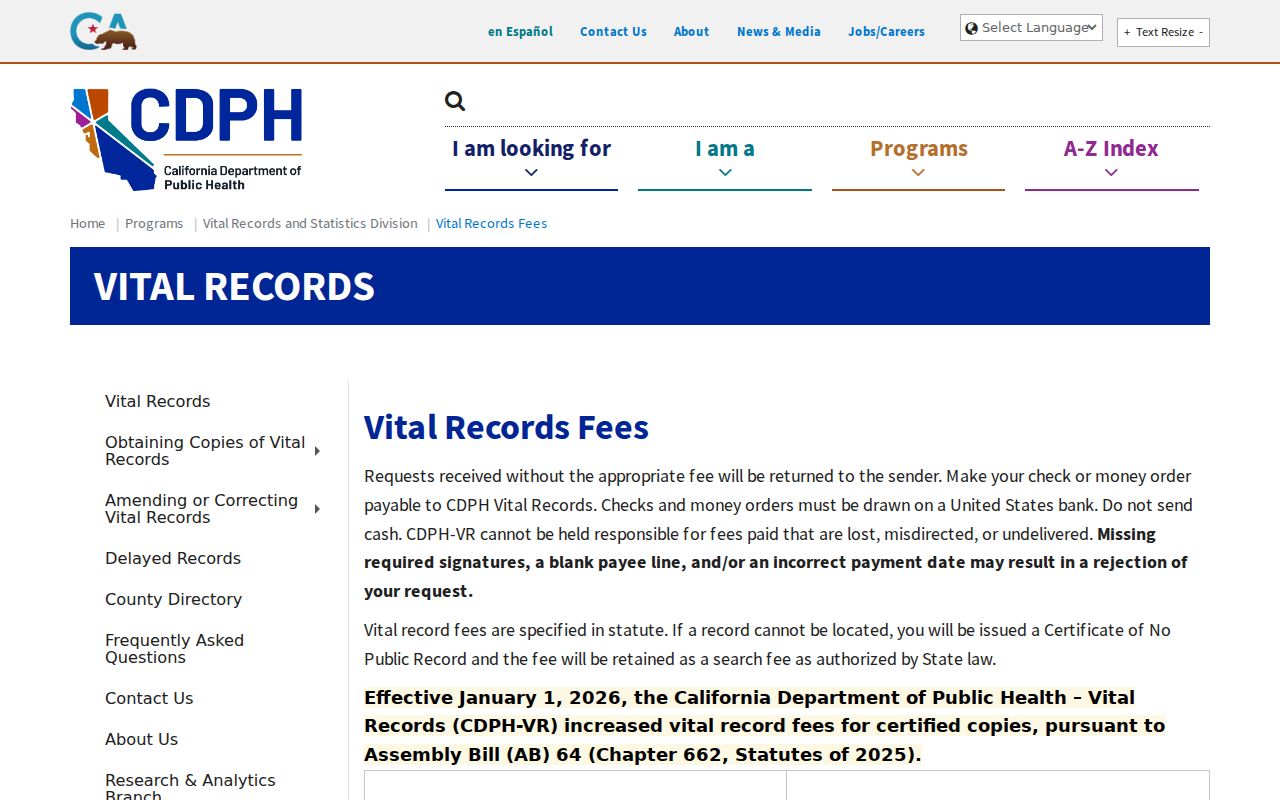
Effective January 1, 2026, the listed certified-copy fees are $31 for a birth record, $26 for a death record, $19 for a marriage record, and $18 for a dissolution certificate. Fees do not remove the authorized-copy, informational-copy, confidential-marriage, adoption, or sealed-record limits.
Past Carlsbad Households Need Two Trails
A sound house history keeps the ownership trail and the household trail side by side. Deeds, APNs, legal descriptions, and probate show what happened to an interest in land. Directories, census pages, yearbooks, newspapers, and obituaries show a listed person or family at a time. When the trails disagree, preserve both findings and state which record supports each one. A trust, name change, protected address, private utility account, or unlisted household can end the search without making the record wrong.
The previous residents of a Carlsbad address should be described with dates and source limits, not with a claim that a person still lives there. Ask an organization to forward a message when a public contact exists, and stop when the evidence reaches a protected or private record.
Lawful use. Use Carlsbad address research for house history, family history, lawful estate work, records verification, and respectful reconnecting. Do not use records to stalk, harass, threaten, or expose a living person; protected addresses and private household details must remain private.